Anantam International SPC Fund - 6 SP
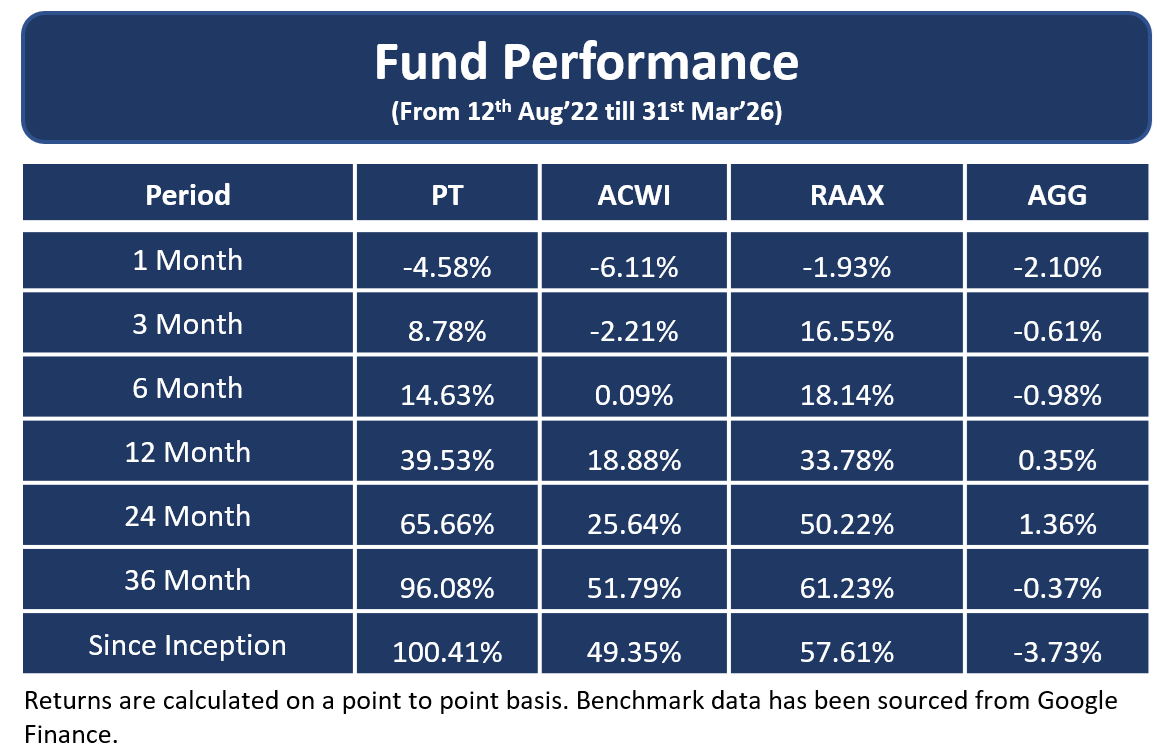
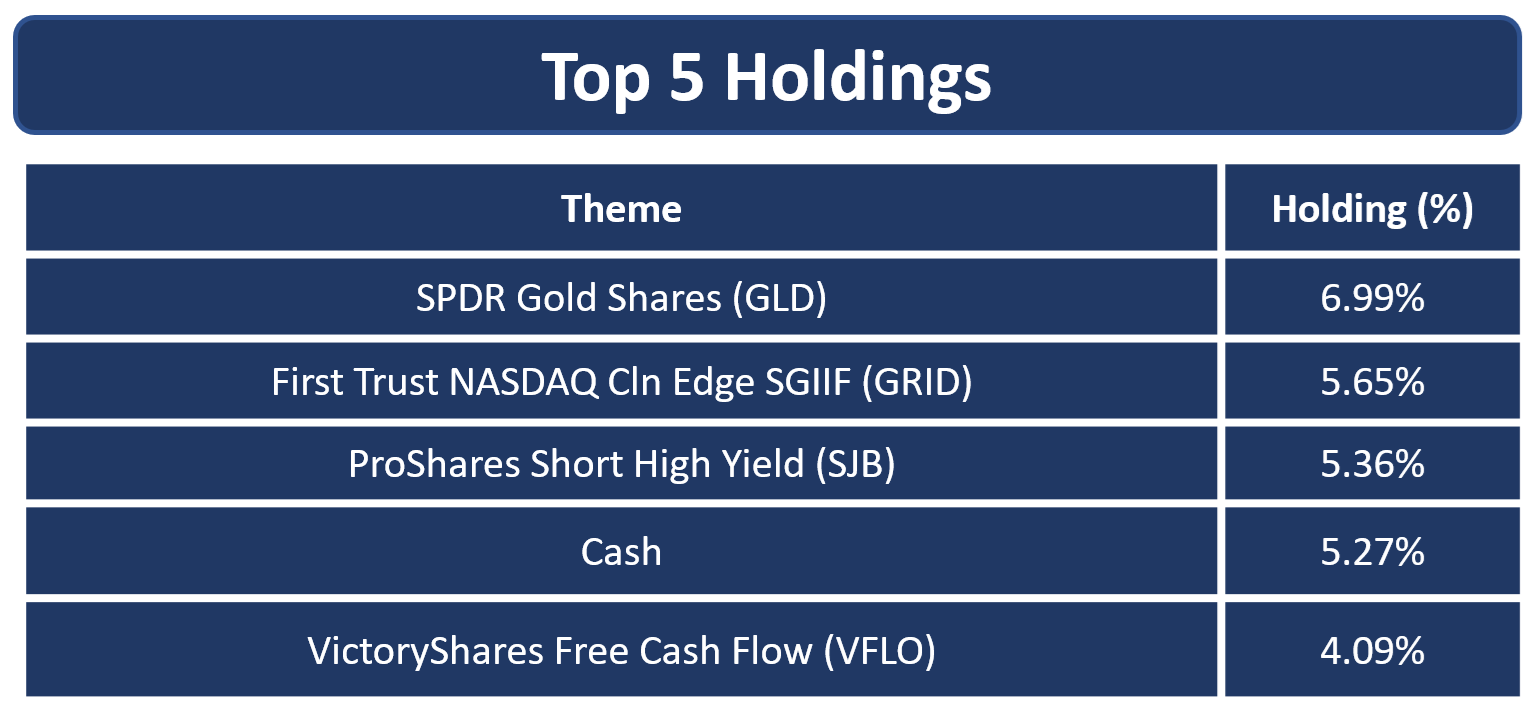
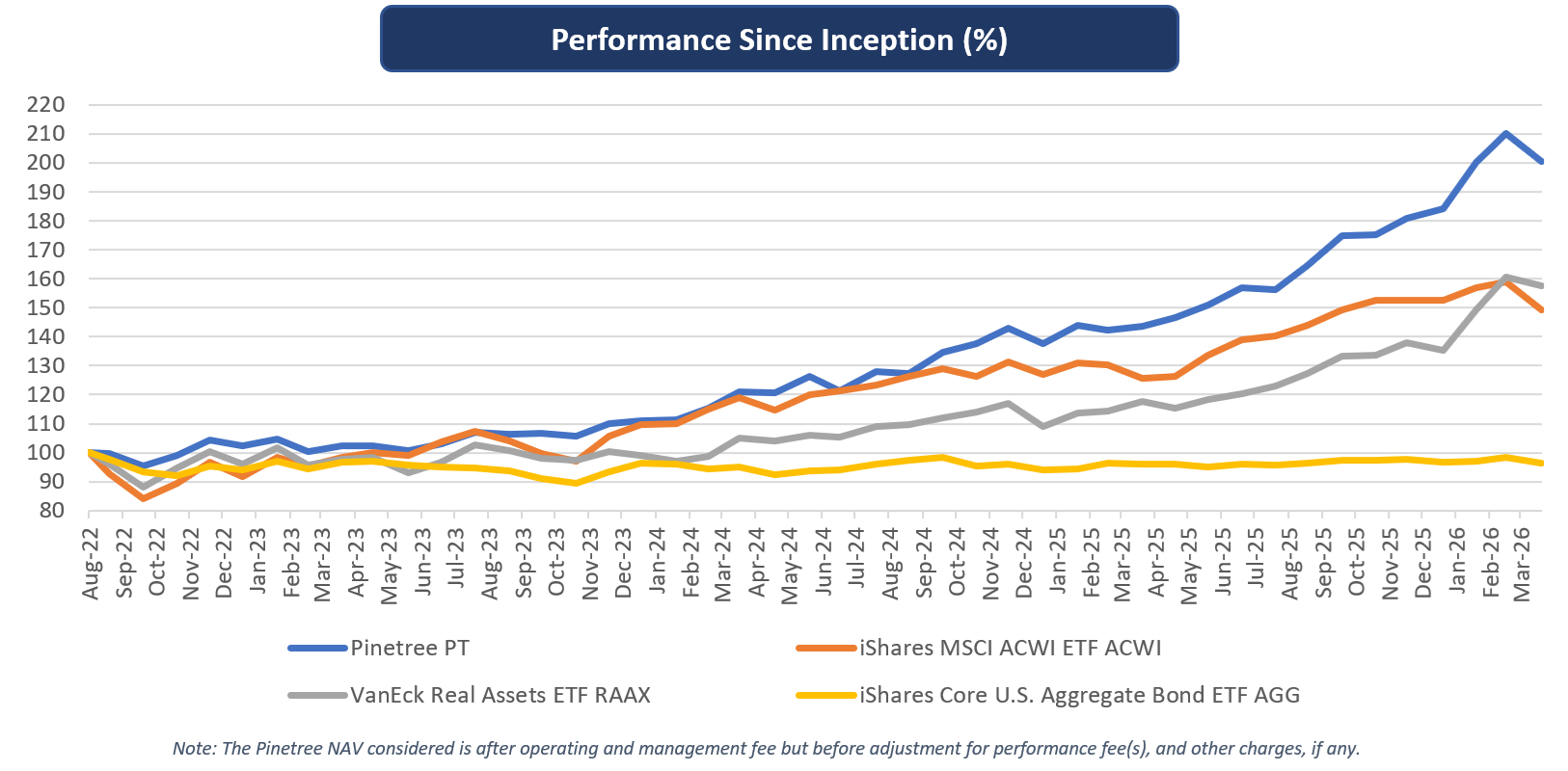
- March was a difficult month for markets and portfolio managers. We gave back some of the gains made in February, although January's outperformance still held up. The Iran war quickly became the dominant theme, overwhelming nearly every other macro narrative.
- The closure of the Strait of Hormuz disrupted global supply chains, hitting oil, gas, and fertiliser flows and exposing the risk of a broader economic shock. The Iran-US-Israel conflict remains a fading but still combustible risk, with peace terms offering little confidence.
- What has not changed is the direction of travel already underway before the conflict. Countries were scrambling for supply chain independence, and that process has accelerated further. The dominance of the U.S. dollar is now being
- questioned more openly, and we suspect the petrodollar recycling mechanism will be weaker going forward than it has been in the past.
- What has changed is more structural. This feels like a modern Suez moment. The world has been reminded that U.S. power is not limitless, and the old Mahan-style assumption that naval chokepoints alone can secure strategic dominance has been dented. Iran's use of drones and missiles has exposed the limits of conventional naval superiority in a way that will shape thinking well beyond this conflict.
- As Erik Prince has argued, drones are to modern warfare what stirrups were to Genghis Khan's cavalry: a transformative force that changes the rules of the battlefield. Drones, especially when paired with missiles, are highly effective asymmetric weapons. They may not be enough to win a war outright, but they are increasingly sufficient to ensure that the other side does not win easily.
- We used active hedging through VIXY to offset part of the month's market stress, reflecting a deliberate risk management posture.
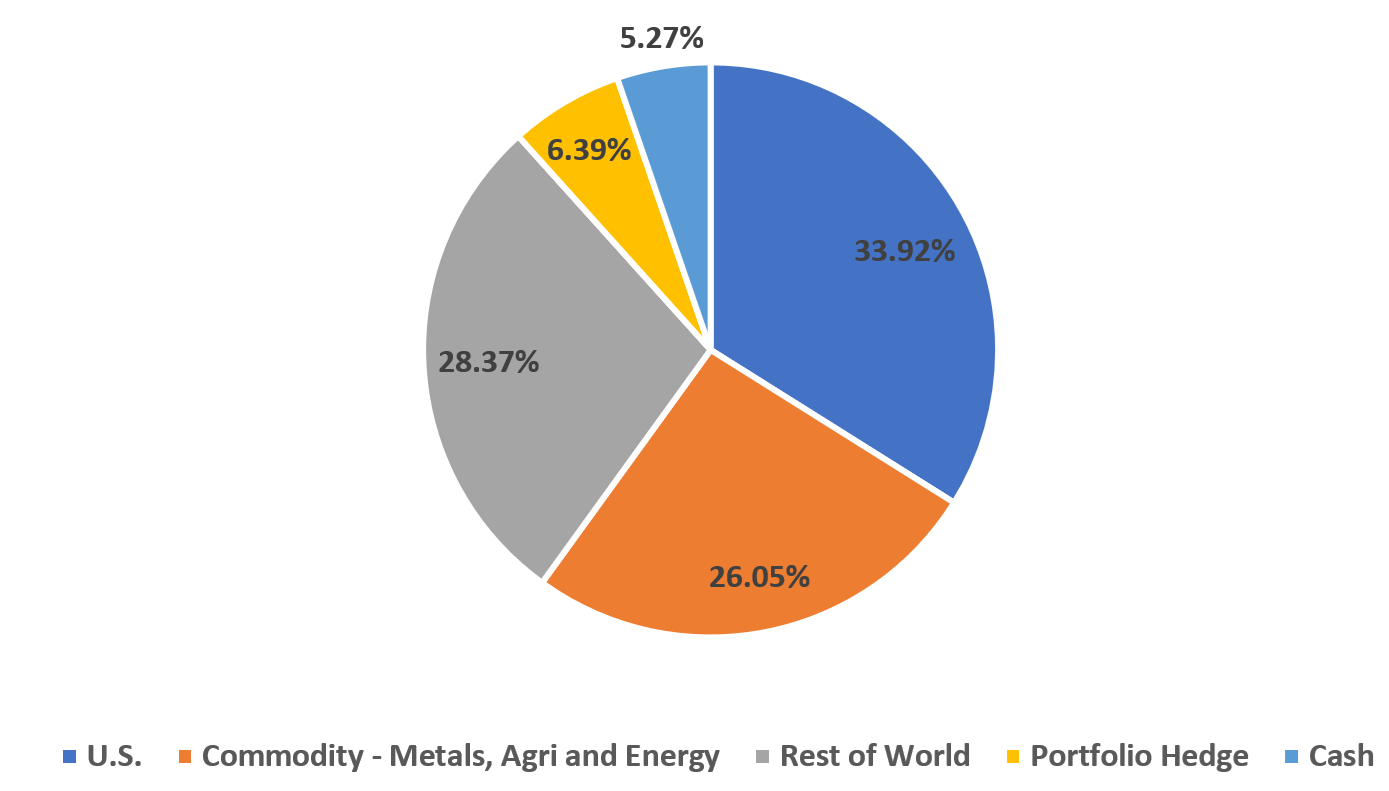
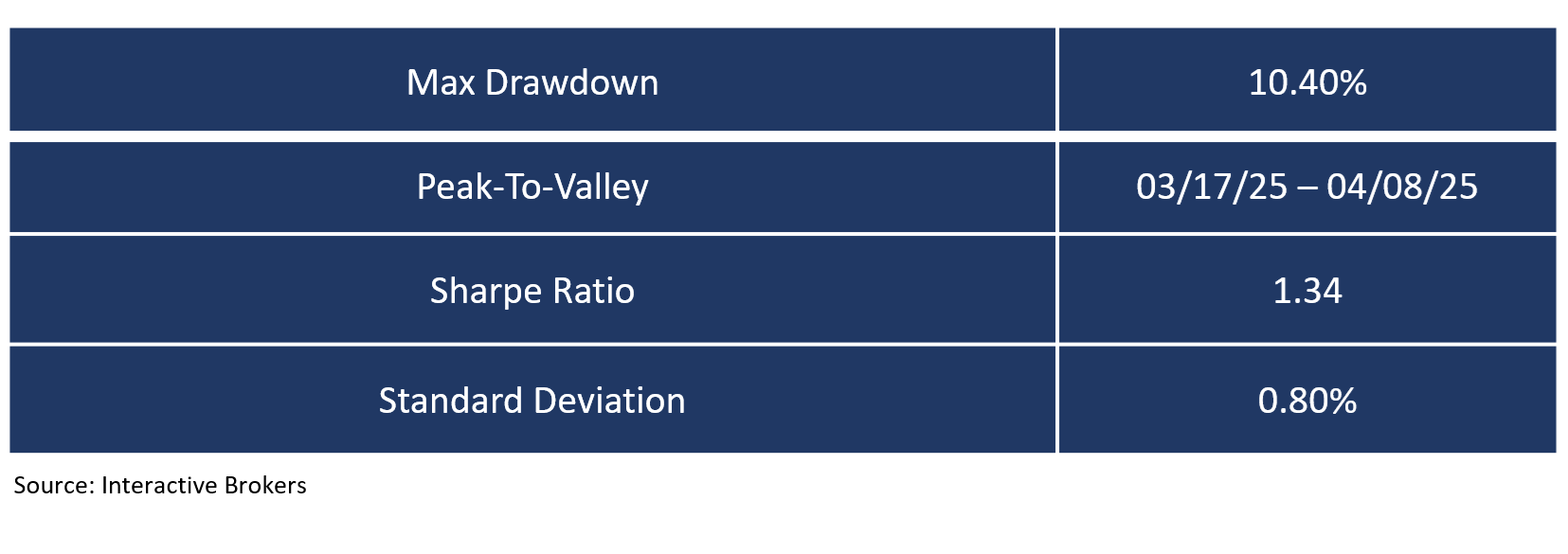
Investment Objective
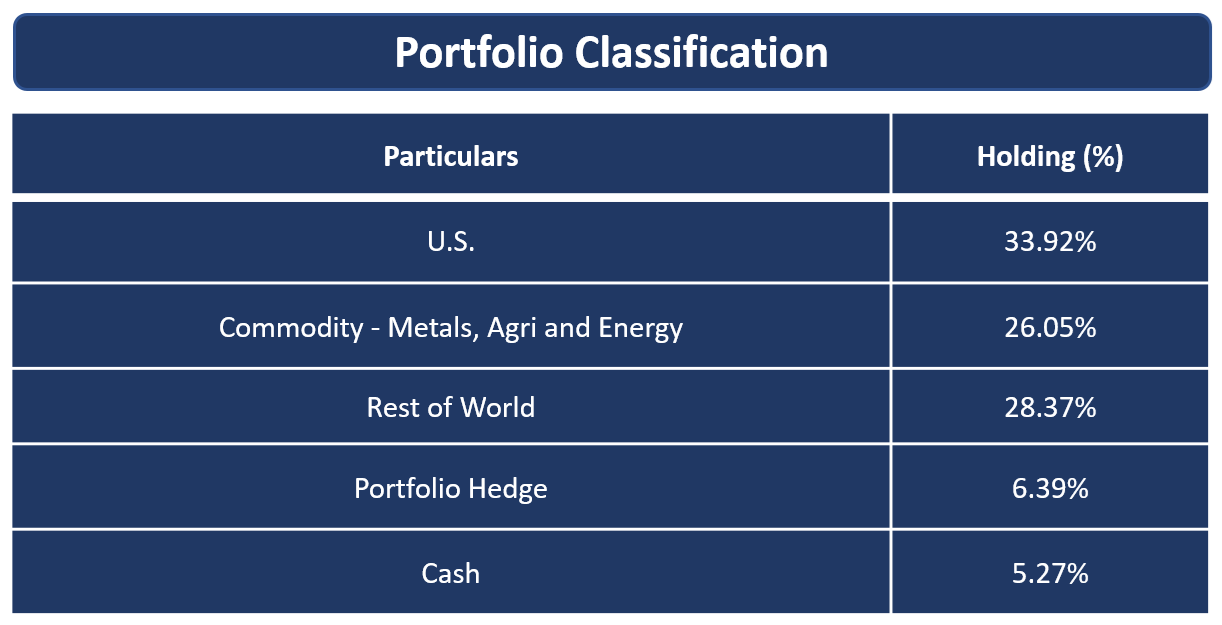
To generate income and capital appreciation by investing primarily in listed securities of developed and select emerging markets. The strategy is implemented mainly through US-listed exchange-traded funds (ETFs) and listed equity securities. Exposure to listed debt or debt-linked instruments, including exchange-traded notes (ETNs), may be taken opportunistically. The fund does not invest in unlisted securities.
| Particulars | Remarks |
|---|---|
| Currency | USD |
| Type | Open ended |
| Minimum Investment | $100,000 |
| Minimum top up post 1st investment | $25,000 |
| Subscription | Weekly, NAV is declared on every Friday and on the last working day of every month |
| Redemption | Anytime, subject to at least 15 calendar days of notice |
| Partial Redemptions | Permitted, subject to post redemption minimum investment at $100,000 |
| Redemption Fee/ Exit Load | 1% for exit within 12 months from investing |
| Management Fee | 1% per annum; charged monthly on average AUM |
| Performance Fee | 15% performance fee over hurdle of 7% (subject to high watermark) |
| Operating Fee | On Actuals, capped at 0.5%p.a. on AUM |
| Hurdle Rate | 7% |
| Fund Name | Anantam International SPC Fund – 6 SP (Cayman Island) |
| Investment Manager | Dovetail Investment Management Limited |
| Fund's Bank Account | SBM Bank (Mauritius) Limited |
| Auditor | Forvis Mazars |
| Administrator | Ohm Dovetail Global Admin (IFSC) Private Limited |
Benchmarks
Equity Benchmark – iShares MSCI ACWI ETF (ACWI): Tracks the MSCI All Country World Index, covering large and mid-cap stocks across 23 developed and 24 emerging markets, representing approximately 85% of global equity market capitalization with U.S. exposure of 64.28%. Serves as a comprehensive reference for global equity performance.
Bond Benchmark – iShares Core U.S. Aggregate Bond ETF (AGG): Tracks the Bloomberg U.S. Aggregate Bond Index, representing the U.S. investment-grade bond market including Treasuries, mortgage-backed securities, and corporate bonds. Serves as the standard reference for U.S. fixed income performance.
Real Assets Benchmark – VanEck Real Assets ETF (RAAX): Provides diversified exposure to commodities, natural resource equities, REITs, infrastructure, and gold. Selected to capture the role of real assets as an inflation hedge and as a diversifier against equity and bond risks.
Peers in the space typically use a 60:40 blend of the MSCI World Stock Index and Bloomberg Global Bond Index as a benchmark. However, we have chosen to present three distinct benchmarks, each at 100% weight, to more clearly reflect PineTree’s investment style and asset allocation.
The inclusion of a real assets benchmark reflects our macro view: as early signs of a multipolar currency world emerge, global supply chain efficiency will be tested, driving procurement costs higher. At the same time, developed economies face mounting debt. In this environment, real asset owners such as commodity producers and efficient commodity procurers are well positioned to benefit. Incorporating real assets into the benchmark increases the challenge for our fund, as hard commodities also serve as an important hedge against inflation.
Together, ACWI, AGG, and RAAX provide a transparent framework to evaluate PineTree’s performance across global equities, U.S. fixed income, and real assets. Each benchmark was selected for its accuracy in representing the targeted asset class and relevance to the current macroeconomic environment.